
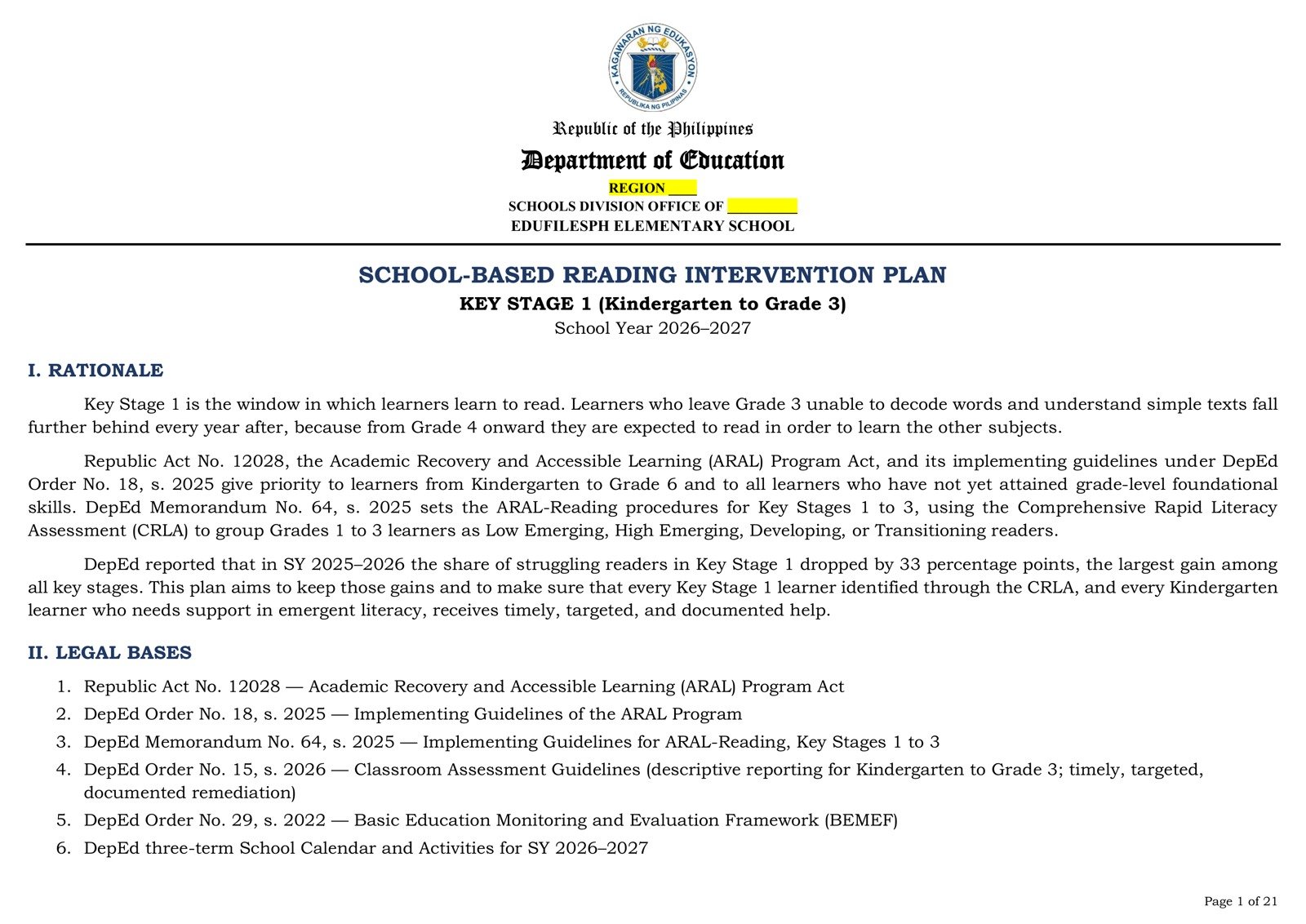
This KS1 reading intervention plan supports teachers working with Key Stage 1: Kindergarten to Grade 3 in School Year 2026–2027. Use this 21-page school-based resource to plan targeted reading support, record learner needs, and monitor progress.
Build the foundations of reading
Young learners need time to connect spoken sounds, letters, words, and meaning. This plan helps teachers organize support for children who need more practice with early literacy. In addition, it provides a way to document each learner’s starting point and progress.
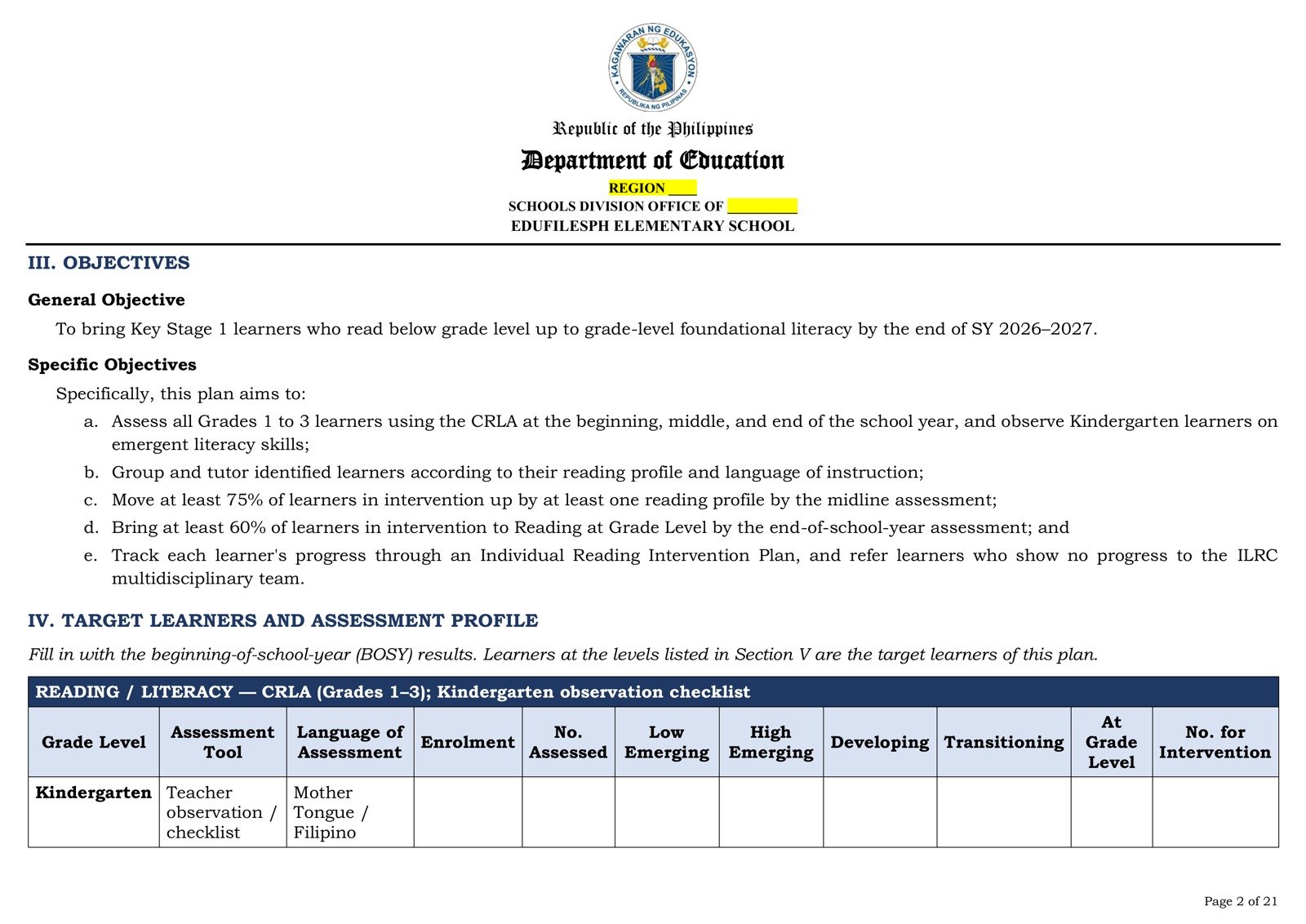
What this KS1 reading intervention plan includes
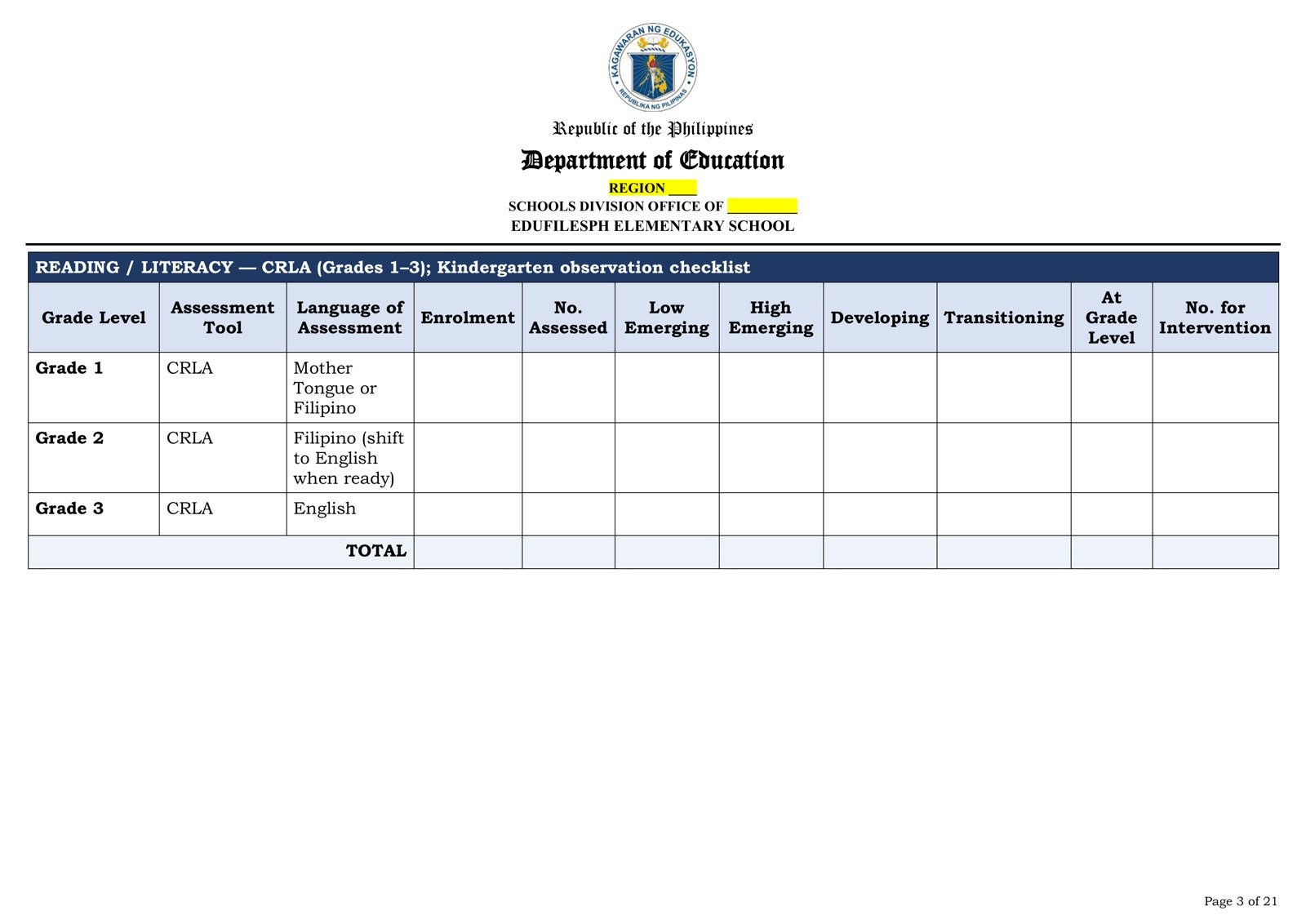
- Rationale, objectives, and a target learner assessment profile
- Reading intervention activities and implementation schedules
- School-level planning and progress monitoring sections
- An Individual Reading Intervention Plan template
- A class reading intervention progress monitoring sheet
- 21 landscape pages in PDF format
How to use your KS1 reading intervention plan
First, review the learner profile. The plan uses Kindergarten observations and the Comprehensive Rapid Literacy Assessment (CRLA) for Grades 1 to 3. Therefore, use the results to choose a skill and match the language of instruction to the learner’s needs.
Next, adapt the school header, responsibilities, schedule, and targets to your context. In addition, review the references and school requirements before implementation. This EduFilesPH resource is a sample planning template that teachers and coordinators can adapt.
Keep early reading practice short and purposeful
Your KS1 reading intervention plan can help you choose one clear goal for each session.
For example, a session can begin with a familiar picture and a spoken word. Guide learners to listen for a sound, connect it with a letter, and read a suitable word. Then, use the word in a short phrase or sentence. These are suggested ways to adapt the session to the identified skill.
Also, model a task before asking learners to try it alone. Use picture clues, letter cards, or a short text at an appropriate level. Afterward, ask a simple question about meaning. This helps you check both word reading and understanding while keeping the activity manageable.
Review progress in your KS1 reading intervention plan
Also, keep a simple record of the starting skill, activities used, and results of each check. For instance, note whether the learner completes a task independently or needs prompts. Compare later work with the starting point. Then, decide whether to repeat a skill, change the activity, or move to the next goal.
Finally, share specific feedback so learners can recognize their improvement. Where appropriate, give parents or guardians a simple practice suggestion. You can also browse our teaching resources for other classroom tools. For official education announcements and issuances, visit the Department of Education website.
Preview the reading intervention plan
The images below show the first three pages. Select an image to view it at a larger size. The complete 21-page plan is available through the PDF link below.
Download the complete PDF
Download Key Stage 1 Reading Intervention Plan (PDF)
File details: 21 pages · Landscape PDF · SY 2026–2027 · Kindergarten to Grade 3

1 thought on “Reading Intervention Plan for Key Stage 1 (Kindergarten–Grade 3) | SY 2026–2027”