
This KS3 numeracy intervention plan supports Key Stage 3 teachers working with Grades 7 to 10 in School Year 2026–2027. Give junior high school learners focused support in the numeracy skills they need for mathematics. This 19-page resource helps teachers and school coordinators plan targeted support and document learner progress.
Supporting confidence in junior high school mathematics
Fractions, decimals, and integers provide a foundation for algebra, functions, geometry, and statistics. This plan combines a structured intervention framework with learner profiling and progress monitoring so teachers can address gaps alongside grade-level instruction.
What this KS3 numeracy intervention plan includes
- A school-based numeracy planning framework for Grades 7 to 10
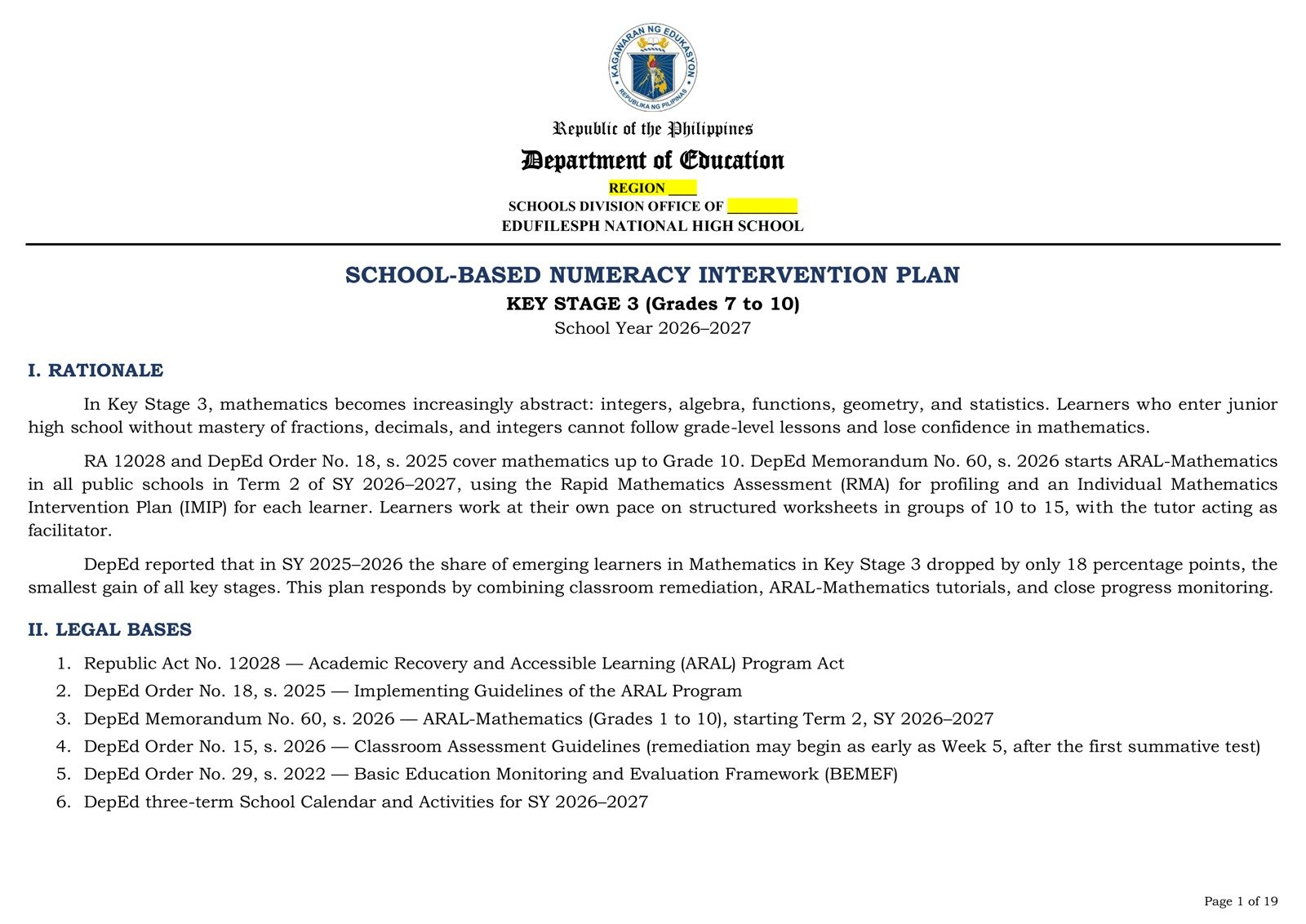
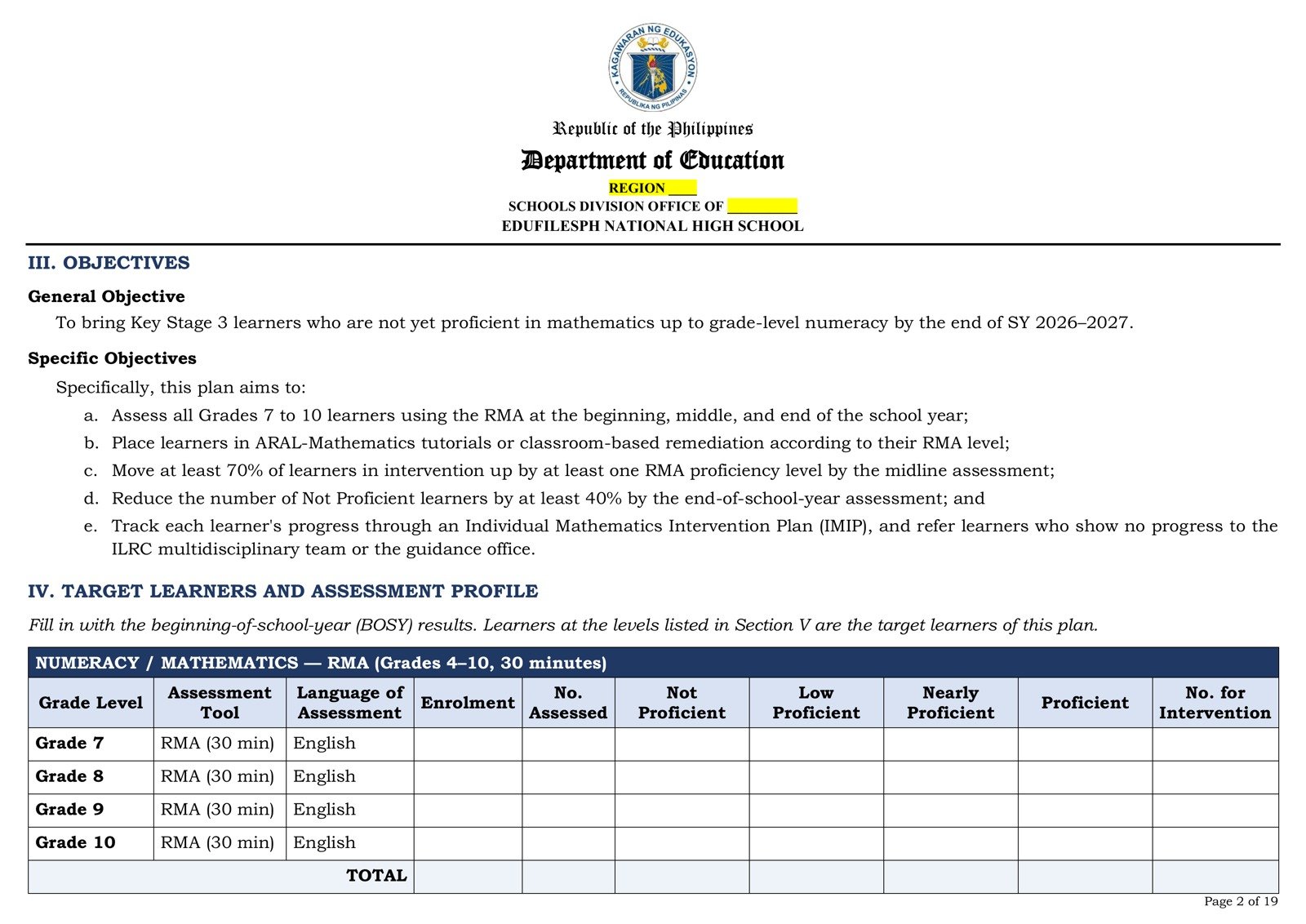
- Rationale, objectives, and a target learner assessment profile
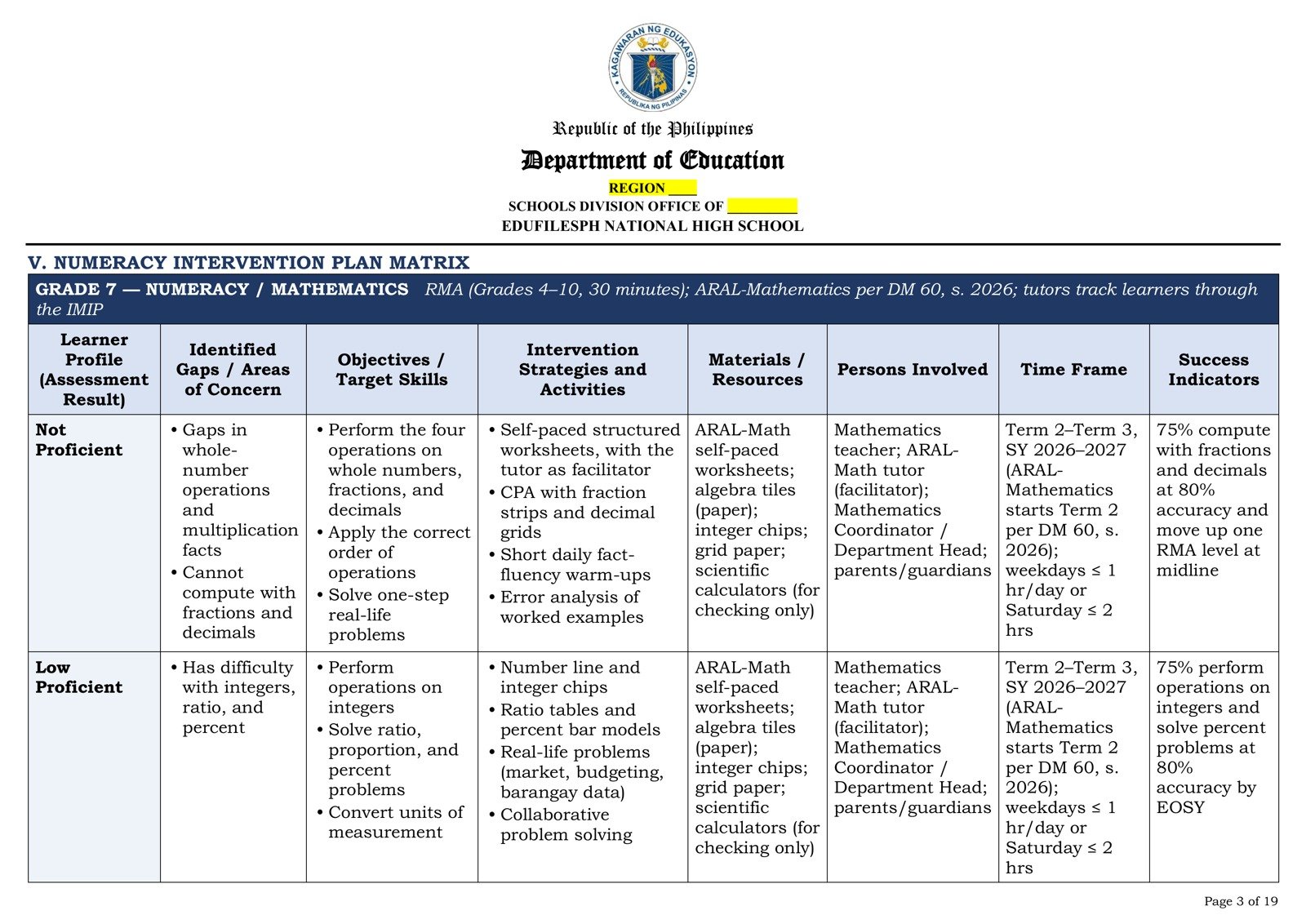
- Intervention activities, implementation schedules, and monitoring tools
- An Individual Mathematics Intervention Plan template and a class progress monitoring sheet
- 19 landscape pages in PDF format
How to use this KS3 numeracy intervention plan
Use learners’ mathematics assessment results to identify priority skills and organize classroom remediation or appropriate tutorial support for Grades 7 to 10. Adapt the activities, grouping, schedule, and success targets to your learners’ needs and your school context.
Next, assign responsibilities, document the support provided, and check progress regularly. Use the results to decide whether to continue, adjust, or extend the intervention.
Before using: Replace the sample school header and placeholders, and review the content against your school’s current requirements. This EduFilesPH resource is a planning template for adaptation.
Address prerequisite skills alongside current lessons
Your KS3 numeracy intervention plan can help you select one clear goal for each session.
In junior high school, a learner may understand a new idea but struggle with the arithmetic needed to complete the task. For example, errors in integer operations can affect algebraic work. Begin with a short check of the prerequisite skill, then connect the practice to the current mathematics lesson.
Use worked examples, guided practice, and brief independent tasks. For instance, ask learners to explain one step so you can see where confusion begins. Also, choose examples with manageable numbers before adding complexity. The aim is to help learners use a skill with understanding and build confidence as they return to grade-level tasks.
Review your KS3 numeracy intervention plan
Keep a simple record of the starting skill, the support given, and the result of each progress check. For instance, note whether a learner can complete a task independently or still needs prompts. Compare later work with the starting point. Then decide whether to repeat a skill, change the activity, or move to the next goal.
Share clear, specific feedback with learners so they can recognize their improvement. Where appropriate, involve parents or guardians through simple practice suggestions. You can also browse our teaching resources for other classroom tools or contact MyEduFiles with questions about this resource. For official education announcements and issuances, visit the Department of Education website.
Preview the intervention plan
The images below show the first 3 pages. Select an image to view it at a larger size. The complete 19-page plan is available through the PDF link below.
Download the complete PDF
Download Key Stage 3 Numeracy Intervention Plan (PDF)
File details: 19 pages · Landscape PDF · SY 2026–2027 · Grades 7 to 10

1 thought on “Numeracy Intervention Plan for Key Stage 3 (Grades 7–10) | SY 2026–2027”